2026-11-09 ·
Spiders in Casa Grande Homes: Which Ones Matter
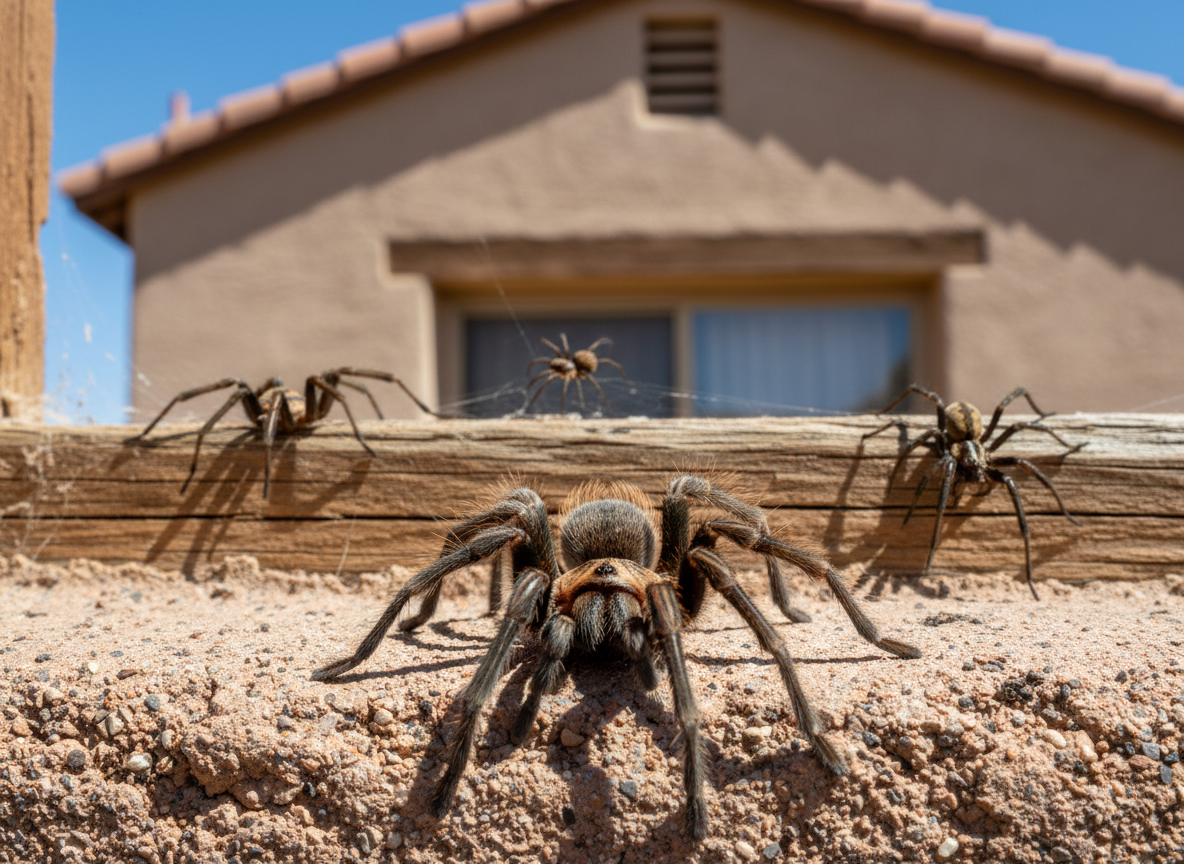
Most spiders around a Casa Grande home are harmless and even helpful, since they eat crickets, roaches and flies. Two are worth knowing on sight: the western black widow and the Arizona brown spider. Both have bites that need medical attention, and both hide in places homeowners reach into without looking.
Western black widow
The female western black widow is glossy black with a red hourglass on the underside of her round belly. Males and young spiders are smaller and brown or striped and are rarely a danger. Black widows build messy, tangled webs with strong, sticky silk close to the ground.
Around Casa Grande homes they nest in block wall gaps, meter and valve boxes, the corners of garages, under patio furniture, inside stacked pots and in the weep screed where the stucco meets the slab. They are most active on warm nights from spring through fall. A bite can cause muscle pain, cramps and sweating. Call Poison Help or seek medical care after a suspected bite, especially for a child or an older adult.
Arizona brown spider
The Arizona brown spider is a desert relative of the brown recluse. It is tan to brown, about the size of a nickel with its legs, with a darker violin-shaped mark on its back and six eyes instead of eight. The brown recluse itself is not established in Arizona, so a brown spider here is far more likely to be this native species or something harmless.
Arizona brown spiders live in the desert under rocks, dead cactus, wood and pack rat nests. They rarely set up inside a lived-in home, but they turn up in garages, sheds and storage boxes near open desert. Bites are uncommon and happen when the spider is pressed against skin, such as in gloves, shoes or old clothing left in a garage. A bite that turns into a spreading sore should be seen by a doctor.
Spiders you can usually leave alone
Wolf spiders are large, hairy and fast, and they hunt on the ground at night instead of building webs. They often wander in under doors after monsoon rain. Desert tarantulas are big and slow, and males roam yards and roads in late summer and fall looking for mates. Cellar spiders with long thin legs hang in corners of garages and closets. Orb weavers build round webs in bushes and under eaves. None of these pose a real threat to healthy people.
Why spiders build up near your home
Spiders follow food. Porch lights draw moths and flies, and monsoon rain sends crickets and roaches toward the slab. More bugs around the house means more spiders. Rock beds, block walls, stacked boxes and clutter in the garage give them shelter right next to the food.
To cut numbers, switch porch lights to yellow bulbs, keep stored boxes off the garage floor in sealed plastic bins and clear debris from along the block walls. Shake out gloves, boots and towels left outside or in the garage before use. Sweep webs from eaves, window frames and patio ceilings with a broom every few weeks.
What spider control costs
Spider control is usually part of a general pest treatment rather than a separate service. HomeGuide puts a one-time general pest treatment at about $100 to $600, and recurring plans at about $40 to $75 a visit after a first visit of $150 to $300. The technician treats the foundation band, block wall bases, garage edges and eaves, and sweeps webs. Black widow nests in meter boxes and wall gaps get direct treatment.
When to call
Call for pest control if you find black widows in the garage, play areas or patio furniture again and again, or if spiders show up indoors along with crickets and roaches. Large numbers of spiders usually mean a large number of insects for them to eat, and treating both is what keeps them down. Spider trouble often follows the same seasons as cockroaches, so one perimeter plan covers both.